what is the best natural wax for candles?
not all natural candle waxes are the same. discover the differences between soy, coconut, rapeseed and beeswax, how each one performs, and why uyinu chooses a carefully balanced coconut–soy wax blend.
not all candle wax is the same…
some waxes burn slowly. some carry scent beautifully. some create a soft, creamy finish, while others are chosen because they are firm, affordable or easy to manufacture at scale.
so, what is the best natural wax for candles?
the honest answer is that there is no single perfect wax.
the best candle wax depends on how it has been sourced, processed, blended and tested. it must also work in harmony with the wick, scent and vessel around it.
at uyinu, we believe every material should have a reason for being there.
not chosen for a label.
chosen for the ritual.
what are natural candles made from?
natural candles are usually made using plant-based or animal-derived waxes rather than petroleum-derived paraffin wax.
the most common natural candle waxes include:
- soy wax
- coconut wax
- rapeseed wax
- beeswax
- palm wax
each wax has its own texture, melting point and burning characteristics.
some candles are made using one type of wax, while others use a natural wax blend, such as coconut and soy wax.
blending waxes can create a more balanced candle by bringing together the strengths of different materials.
however, seeing the word “natural” on a candle label does not reveal the whole formulation.
the wax may be plant-based while the candle contains synthetic fragrance, dyes or additional ingredients. a candle described as coconut wax may also contain only a small amount of coconut.
this is why transparency matters.
a considered candle should tell you what it is made from, rather than relying on one comforting word.
is soy wax a natural candle wax?
soy wax is one of the most widely recognised natural candle waxes.
it is a vegetable wax made using oil extracted from soybeans. the oil is processed so that it becomes solid at room temperature and can be used in candles.
soy wax candles became popular as a plant-based alternative to conventional paraffin candles.
what are the benefits of soy wax candles?
soy wax is often chosen because it is:
- plant-based
- suitable for container candles
- relatively slow burning
- widely available
- able to hold scent effectively
- firmer than pure coconut wax
soy wax gives a candle structure and can create a steady, even melt pool when paired with the correct wick.
it does not always remain perfectly smooth.
soy candles may develop frosting, small cracks or an uneven surface after burning. these changes do not necessarily mean that the candle has been made badly.
they can simply be part of working with a vegetable-based material.
a handmade candle does not need to appear untouched to have been made well.
sometimes, the surface carries a quiet record of the flame.
is coconut wax good for candles?
coconut wax is made from coconut oil and is known for its soft, creamy appearance.
it is often used in luxury natural candles because of its smooth texture and ability to carry scent.
what are the benefits of coconut wax candles?
coconut wax can offer:
- a soft, creamy finish
- good scent distribution
- a smooth melt pool
- a refined appearance
- a gentle, even texture
however, pure coconut wax is very soft and has a relatively low melting point.
this can make it unstable in warm rooms or during delivery. it may soften, move or lose its shape more easily than a firmer candle wax.
for this reason, coconut wax is often combined with soy wax or another firmer vegetable wax.
the blend keeps the softness and smooth appearance of coconut while gaining the stability needed for a more consistent candle.
soy wax vs coconut wax: which is better?
when comparing soy wax vs coconut wax, neither is automatically better.
they simply bring different qualities.
soy wax provides structure and stability.
coconut wax brings softness, creaminess and a smooth melt.
used alone, soy wax can appear more textured. pure coconut wax may be too soft for a refill insert or container candle.
used together, they can become more balanced.
this is why many natural candle makers choose a coconut soy wax blend.
rather than asking whether soy wax or coconut wax is best, it can be more useful to ask whether the wax has been selected and tested for that particular candle.
the vessel diameter, number of wicks, scent concentration and depth of wax will all affect how the candle burns.
wax cannot be considered in isolation.
what is a coconut soy wax blend?
a coconut soy wax blend combines coconut wax with soy wax.
soy gives the candle a firmer structure. coconut softens the blend and creates a creamier appearance.
when carefully formulated, a coconut soy wax candle may offer:
- an even melt pool
- a soft, smooth texture
- good scent release
- more stability than pure coconut wax
- a slow and considered burn
a wax blend is not necessarily a diluted or lesser version of a single wax.
sometimes, blending is what allows each material to perform more beautifully.
one brings structure.
the other brings softness.
neither needs to overpower the other.
what is rapeseed wax?
rapeseed wax is a vegetable-based candle wax made using oil from the rapeseed plant.
it has become increasingly popular among uk and european candle makers, particularly because rapeseed crops can be grown closer to home than coconut or soy.
rapeseed wax is often used on its own or blended with coconut wax.
it can create a creamy appearance and can work well in container candles.
what are the benefits of rapeseed wax?
rapeseed wax may offer:
- a plant-based alternative to paraffin
- a soft and creamy finish
- good compatibility with container candles
- the potential for a shorter european supply chain
- good blending qualities with coconut wax
however, rapeseed wax should not automatically be described as the most sustainable or natural candle wax.
its impact depends on where the crop is grown, how it is farmed and how the oil is processed.
is rapeseed wax sustainable?
rapeseed wax is often marketed as one of the most sustainable natural candle waxes, particularly when the crop has been grown in the uk or europe.
there can be advantages to using a material produced closer to where the finished candle is made.
a shorter supply chain may reduce the distance travelled by raw ingredients, and rapeseed is widely cultivated across europe.
but locally grown does not automatically mean low impact.
rapeseed is a large-scale agricultural crop. depending on the farming method, its cultivation may involve fertilisers, pesticides, intensive land use and repeated soil management.
nitrogen-based fertilisers can contribute to greenhouse-gas emissions, while pesticide use can affect insects and surrounding ecosystems when it is not carefully controlled.
the crop’s bright yellow flowers may provide food for pollinators, but concerns have also been raised about the effect of certain agricultural treatments on bees and other wildlife.
there is also the processing to consider.
rapeseed begins as a liquid vegetable oil. to become a firm candle wax, it must be extracted, refined and altered so that it remains solid at room temperature.
this does not make rapeseed wax inherently harmful.
it does mean that plant-based should not be mistaken for raw, unprocessed or automatically environmentally gentle.
the same scrutiny should be applied to every natural candle wax.
soy can be linked to intensive farming, land-use pressures and long supply chains.
coconut may travel much farther before reaching a uk candle maker and can also have its own agricultural and social impacts.
rapeseed may be grown closer to home but can still rely on industrial agriculture and significant processing.
no plant wax should be presented as perfect.
what matters is transparency:
- where the crop was grown
- how it was cultivated
- how the oil was extracted
- how heavily the wax was processed
- whether the supply chain can be traced
- how the wax performs within the finished candle
- whether the candle has been designed to reduce repeated waste
a material should not be celebrated simply because it comes from a plant.
it should be chosen with awareness of the full journey behind it.
is rapeseed wax bad for candles?
rapeseed wax is not automatically bad, toxic or unsafe to use in candles.
the more accurate concern is that its environmental benefits can sometimes be overstated.
a rapeseed candle may still be a thoughtful choice when the wax is responsibly sourced, properly tested and used in a well-designed candle.
but the word rapeseed alone does not prove that a candle is more sustainable.
the farming, processing, transport, formulation and lifespan of the finished product all matter.
this is why uyinu does not describe one wax as flawless while presenting another as harmful.
materials are more complex than that.
we prefer honest choices over perfect claims.
is beeswax the best natural wax for candles?
beeswax is one of the oldest materials used to make candles.
it is created by honeybees and has a naturally firm texture. less-refined beeswax may also have a subtle honey-like scent and a warm golden colour.
beeswax candles are often used for tapers, pillars and unscented candles because the wax already has character of its own.
what are the benefits of beeswax candles?
beeswax is:
- naturally firm
- traditionally used in candle making
- suitable for pillars and taper candles
- able to burn without added fragrance
- naturally aromatic in its less-refined form
beeswax may be a beautiful choice, but it is not necessarily the best wax for every type of candle.
its natural aroma can compete with delicate essential-oil blends, and it is not suitable for people looking for a vegan candle.
the best material is always connected to the purpose of the object.
what about palm wax?
palm wax is a vegetable wax made from palm oil.
it is often used in firm candles and can create distinctive crystalline textures.
although palm wax is plant-based, its sustainability depends heavily on how the palm oil has been sourced.
palm oil production has been associated with deforestation, habitat loss and biodiversity damage in some regions.
certified or responsibly sourced palm may reduce some of these concerns, but the supply chain should still be carefully examined.
once again, plant-based does not automatically mean low impact.
is paraffin wax natural?
paraffin wax is not usually classed as a natural candle wax.
it is derived from petroleum and remains widely used in commercial candles because it is affordable, stable, consistent and capable of carrying a strong fragrance.
paraffin can also create a smooth and uniform finish, making it suitable for large-scale manufacturing.
it is often contrasted with natural candle waxes, but exaggerated claims should be avoided.
a candle should always be assessed as a complete formulation.
wax type alone does not tell you whether a candle has been made well. the wick, scent concentration, vessel and burning conditions all influence its performance.
all candles can produce soot if the wick is too long, the flame is disturbed or the candle has not been properly formulated.
the difference is often one of material choice.
some people prefer natural candle waxes because they want to move away from petroleum-derived materials.
others are drawn to the softness, texture and natural variations found in vegetable wax.
at uyinu, our choices are not made through fear.
they are made through intention.
are natural wax candles non-toxic?
the phrase “non-toxic candles” is used widely, but it should be treated with care.
a candle is made from more than wax.
its scent, wick, colour, additives, vessel and burning conditions all matter.
choosing a natural candle wax does not automatically explain what else has been added to the candle.
a soy wax candle may still contain synthetic fragrance or dyes. a coconut candle may still use a mixed wax formulation. a natural candle can still perform poorly if it has not been tested correctly.
when choosing a more considered candle, check:
- which wax or wax blend is used
- whether the ingredients are clearly disclosed
- how the candle is scented
- what the wick is made from
- whether dyes or unnecessary additives are present
- whether the candle has been burn-tested
- where and how the candle is made
transparency allows you to make your own choice.
you should not have to decode vague claims to understand what you are bringing into your home.
what is the healthiest candle wax?
there is no single candle wax that can accurately be called the healthiest in every situation.
the way a candle burns is affected by its full formulation and by how it is used.
even a natural wax candle needs care.
the wick should be trimmed. the candle should be kept away from draughts. the wax should be allowed to melt evenly without being left burning for too long.
rather than searching for one perfect candle wax, look for a candle made with restraint, transparency and proper testing.
choose fewer candles.
choose them with care.
burn them slowly.
why does uyinu use coconut and soy wax?
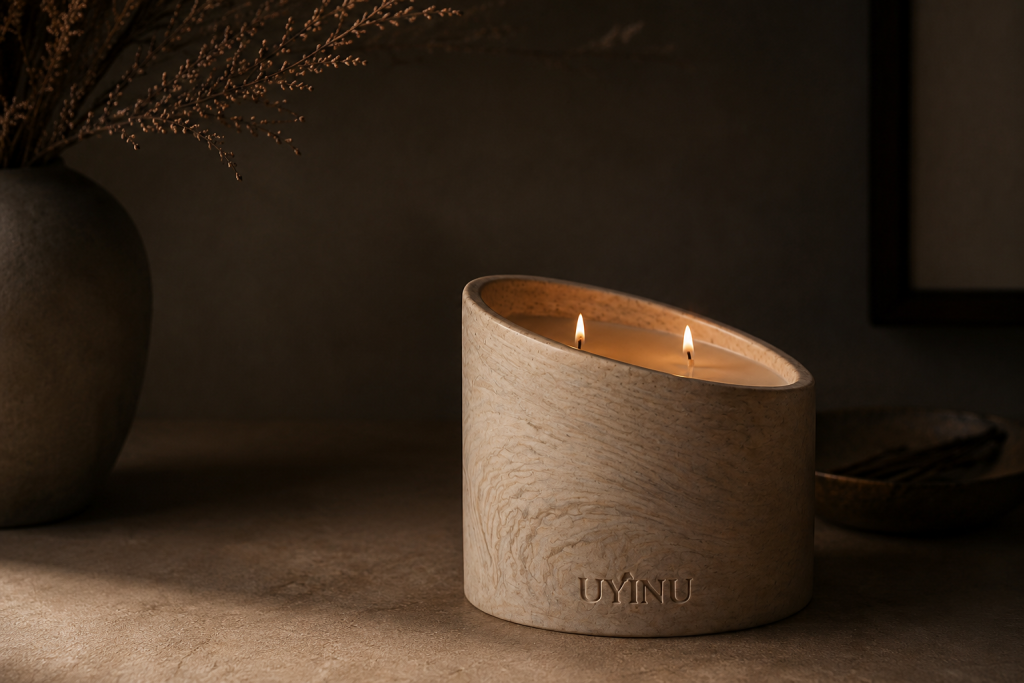
uyinu candles are made using a coconut soy wax blend.
we chose soy wax for structure and coconut wax for its softer, creamier character.
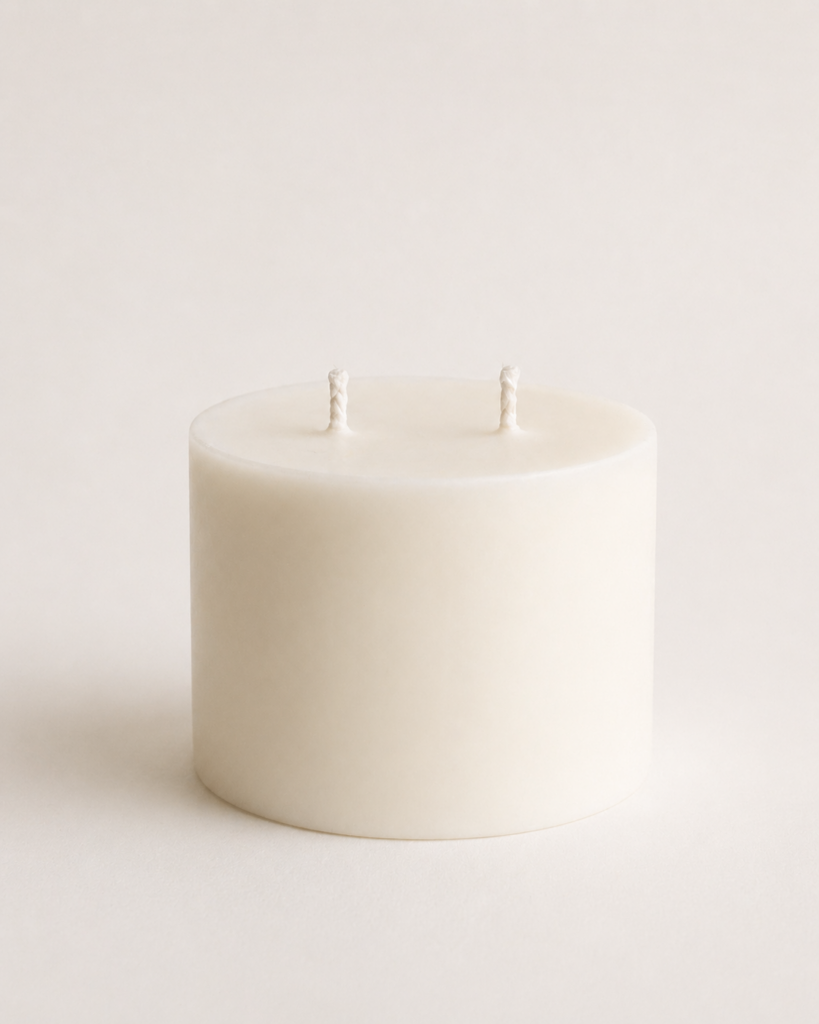
together, they create a wax suited to our refill insert and the quiet, even burn we wanted it to hold.
the candle is made with two pure cotton wicks and an essential-oil-led scent blend.
the dimensions of the refill, the distance between the wicks, the depth of the wax and the shape of the vessel have all been considered together.
because a candle is not simply wax poured around a wick.
it is a relationship between materials.
the wax must soften at the right pace.
the flame must remain steady.
the scent should unfold without overwhelming the room.
each part should make space for the next.
is a natural wax blend better than a single wax?
a natural wax blend can sometimes perform better than a single wax because each ingredient contributes something different.
a soft wax may benefit from the structure of a firmer wax.
a firm wax may become smoother and more balanced when blended with a softer material.
the quality of a wax blend depends on the formulation.
it should not be judged by the number of waxes it contains, but by how thoughtfully they have been combined and how well the finished candle performs.
a blend is not automatically a compromise.
it can be a deliberate meeting point between different qualities.
strength and softness.
structure and flow.
the balance between the two.
how to choose the best natural wax candle…
when choosing a natural wax candle, begin with the ingredients.
look beyond the front of the label and ask:
- is the full wax blend disclosed?
- is it made from soy, coconut, rapeseed or beeswax?
- does it contain paraffin?
- is the candle scented with essential oils, fragrance oils or both?
- what material is the wick made from?
- has the candle been properly burn-tested?
- where is the candle produced?
- can the vessel be reused or refilled?
you may also want to consider how long the object has been designed to remain in your home.
a candle poured into a disposable container may use natural wax but still create repeated waste.
a refillable candle allows the vessel to remain while only the part that has been used is replaced.
the material matters.
but so does what happens after the final burn.
so, what is the best natural wax for candles?
soy, coconut, rapeseed and beeswax can all be used to create beautiful candles.
soy offers structure and versatility.
coconut brings softness and a creamy finish.
rapeseed provides another plant-based option and may offer a shorter supply chain when it is grown and processed in europe.
beeswax carries its own natural aroma and centuries of candle-making tradition.
none is perfect.
none should be judged by one word on a label.
the best natural wax for candles is the one selected for the object it is intended to become.
for a refillable, scented container candle, we believe a carefully tested coconut soy wax blend creates a beautiful balance.
stable enough to hold its form.
soft enough to melt evenly.
quiet enough to let the scent unfold.
not one material competing with another.
two materials meeting in the middle.
a small balance of strength and softness.
the yin way.
with love,
uyinu x
ready to choose a candle made with intention?
discover no.1 — sacred pause
poured with a coconut–soy wax blend, pure cotton wicks and an essential-oil-led scent designed to soften the space...